

Maintaining a healthy smile isn’t just about brushing and flossing; it begins with the foods and beverages you consume. What you eat directly impacts tooth enamel strength, gum health, saliva production, and the overall balance of oral bacteria, all of which support effective tooth decay treatment and play a key role in preventing cavities, decay, and gum disease.
A diet high in sugar or acidic foods can accelerate enamel erosion and promote bacterial growth, while nutrient-rich foods help strengthen teeth, protect gums, and support long-term oral health.
At Cure n Care Dental Center in Johar Town, Lahore, we emphasize the connection between nutrition and dental wellness, helping our patients make choices that support strong teeth, healthy gums, and long-lasting smiles.
In this blog, we’ll explore how different foods and beverages influence oral health, which dietary habits contribute to tooth decay, and tips for maintaining a diet that promotes a healthier mouth.
How Diet Affects Tooth Structure and Oral Health?
Your teeth are composed of enamel, dentin, and pulp, each playing a vital role in protecting your teeth and supporting oral function. Enamel, the outermost layer, is the hardest substance in the human body, but it is still susceptible to damage from diet and lifestyle choices.
The foods and beverages you consume can either strengthen teeth and gums or contribute to decay, sensitivity, and other dental problems.
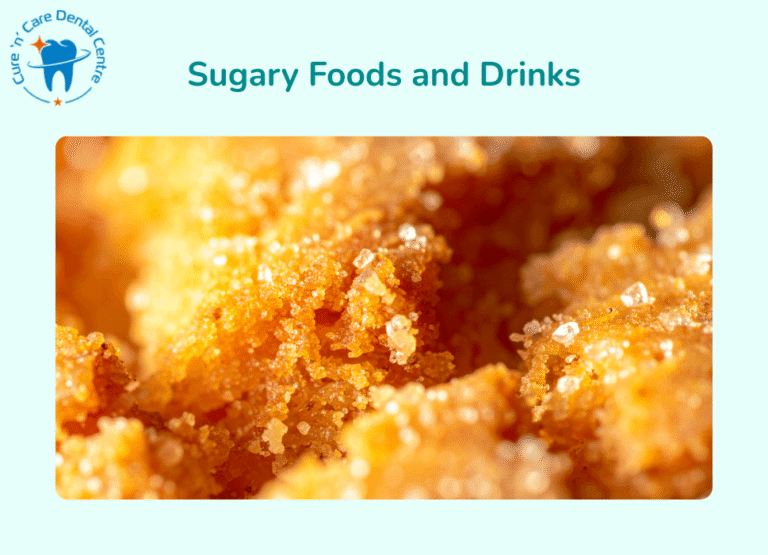
Sugary Foods and Drinks:
Sweets, chocolates, soda, and fruit juices contain high levels of sugar, which serve as a food source for harmful oral bacteria. These bacteria produce acids that gradually erode enamel, leading to cavities, sensitivity, and even tooth loss if left untreated. Frequent consumption of sugary snacks or drinks increases the duration of acid exposure, accelerating enamel wear and plaque buildup.
Acidic Foods and Beverages:
Citrus fruits, vinegar, carbonated drinks, and energy drinks are highly acidic. Regular consumption can soften and wear down enamel over time, increasing tooth sensitivity and making teeth more prone to cavities and fractures. Pairing acidic foods with neutralizing agents like dairy or water can help reduce enamel erosion.
Sticky Foods:
Caramel, toffee, and dried fruits tend to cling to the surface of teeth, providing prolonged exposure to sugars for bacteria. This increases the risk of plaque formation and cavities, especially in hard-to-reach areas between teeth. Brushing and flossing after consuming sticky foods is essential to minimize damage.
Lack of Essential Nutrients:
Diets low in calcium, phosphorus, vitamin D, and other essential vitamins can weaken teeth and gums. Inadequate nutrition reduces enamel strength, slows remineralization, and increases susceptibility to decay and gum disease. Consuming a nutrient-rich diet supports enamel repair, gum health, and overall oral resilience.
A well-balanced diet not only nourishes your body but also plays a critical role in maintaining strong enamel, healthy gums, and a resilient oral environment. Making mindful dietary choices, combined with regular brushing, flossing, and professional dental care, helps protect your teeth from decay, sensitivity, and other oral health issues, ensuring a strong and lasting smile.
Foods That Promote Healthy Teeth and Gums
Eating the right foods can strengthen teeth, support gum health, and protect against decay. Including nutrient-rich options in your daily diet is one of the most effective ways to maintain a healthy smile while reducing the risk of cavities and gum disease.
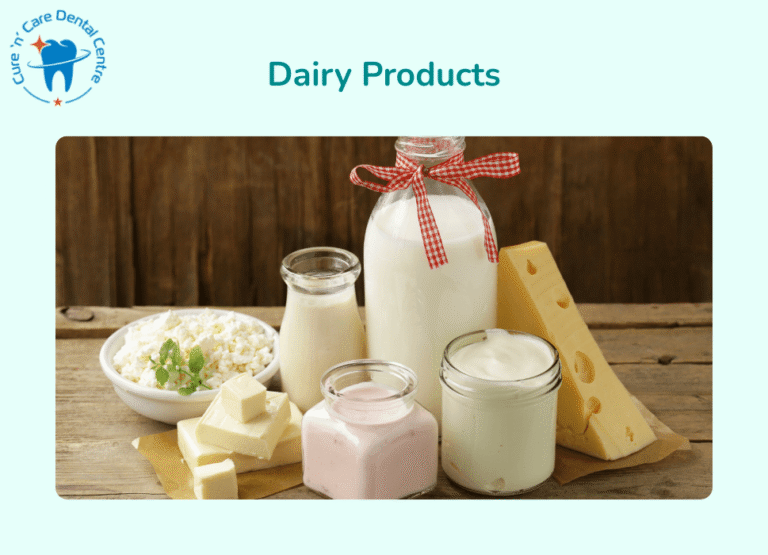
Dairy Products:
Milk, cheese, and yogurt are packed with calcium and phosphate, essential minerals that strengthen tooth enamel and help repair early damage. Cheese also stimulates saliva production, which neutralizes harmful acids and helps prevent decay. Incorporating dairy into your meals supports long-term tooth and bone health.
Leafy Greens and Vegetables:
Vegetables like spinach, kale, and broccoli are rich in vitamins A, C, and K, along with calcium and folate. These nutrients are vital for gum health, reducing inflammation, and promoting tissue repair. Crunchy vegetables such as carrots and celery also act as natural toothbrushes, helping remove food particles and plaque from teeth.
Fruits:
While some fruits are acidic, others like apples, pears, and strawberries can stimulate saliva production, which helps neutralize acids, wash away debris, and protect enamel. Additionally, fruits provide essential vitamins like vitamin C, which supports healthy gums and overall oral tissue integrity.
Nuts and Seeds:
Almonds, walnuts, sesame seeds, and other nuts are excellent sources of calcium, magnesium, protein, and healthy fats, all of which support strong teeth and jawbones. Nuts also provide a crunchy texture that can help remove plaque naturally while boosting overall oral health.
Water:
Drinking plenty of water is one of the simplest and most effective ways to maintain oral health. Water helps wash away food particles, reduce acid buildup, maintain saliva flow, and inhibit bacterial growth, keeping teeth and gums cleaner and healthier between meals.
Incorporating these foods into a balanced, tooth-friendly diet, combined with good oral hygiene and regular dental checkups, can significantly reduce the risk of decay and gum disease. By making mindful dietary choices, you can strengthen your teeth, maintain healthy gums, and enjoy a brighter, longer-lasting smile.
Role of Meal Timing and Snacking
When it comes to oral health, how often you eat can be just as important as what you eat. Frequent snacking, especially on sugary or starchy foods, increases the amount of acid attacks on your teeth, giving oral bacteria more opportunities to erode enamel and cause cavities. By being mindful of meal timing and snack choices, you can protect your teeth, support enamel strength, and reduce the risk of decay.
Limit Between-Meal Sugary Snacks:
Constantly reaching for sweets, candies, or processed snacks exposes your teeth to repeated acid attacks, which can accelerate enamel erosion and promote plaque buildup. Limiting sugary snacks to mealtimes helps reduce this risk and allows your saliva to naturally neutralize acids between meals.
Choose Tooth-Friendly Snacks:
Not all snacks harm your teeth. Options like cheese, raw vegetables, nuts, and seeds are excellent choices. These foods not only provide essential nutrients but also stimulate saliva production, which naturally cleanses the mouth, neutralizes acids, and helps prevent decay.
Rinse After Meals:
Drinking water after eating, or chewing sugar-free gum, helps wash away food particles, dilute acids, and maintain a healthy oral environment. This simple habit can reduce bacterial growth, minimize plaque formation, and protect enamel between brushing sessions.
By combining mindful meal timing, tooth-friendly snacking, and good oral hygiene practices, you can significantly lower your risk of cavities and maintain healthier teeth and gums.
Invest in Your Smile for the Long Term
By combining regular dental visits, preventive care, and mindful eating habits, you can protect your teeth and gums from decay and disease. Investing in professional guidance at Cure n Care Dental Center to ensure a strong, healthy, and confident smile for years to come.
Beverages and Oral Health
Beverages can have a profound impact on oral health, sometimes even more than solid foods. What you drink affects your enamel, saliva flow, and bacterial balance, influencing the risk of cavities, tooth sensitivity, and gum disease. Making mindful beverage choices is an important step toward maintaining a healthy smile.
Sugary Drinks:
Sodas, energy drinks, sweetened teas, and flavored juices are high in sugar, which feeds harmful oral bacteria. These bacteria produce acids that erode enamel, leading to cavities, sensitivity, and, over time, more serious dental problems. Frequent consumption of sugary drinks greatly increases the risk of decay, especially if consumed between meals.
Acidic Drinks:
Citrus juices, carbonated beverages, and certain energy drinks contain acids that soften tooth enamel, making it more vulnerable to wear, sensitivity, and cavities. Pairing acidic drinks with water or consuming them with meals can help reduce their impact on enamel.
Tea and Coffee:
Moderate intake of tea and coffee is generally safe for teeth. However, frequent consumption of black tea or coffee can cause surface staining, affecting the appearance of your smile. Unlike sugary beverages, these drinks do not directly promote cavities, but good oral hygiene and occasional professional cleaning can help maintain a bright, healthy smile.
By being aware of how beverages affect your teeth and gums, and by choosing tooth-friendly drinks like water and unsweetened options, you can protect enamel, reduce bacterial growth, and maintain oral health.
Tips for a Tooth-Friendly Diet
Maintaining strong teeth and healthy gums is easier when you adopt mindful eating habits. A tooth-friendly diet, combined with proper oral hygiene and regular dental checkups, can significantly reduce the risk of cavities, enamel erosion, and gum disease. Here are some practical tips to help protect your smile:
Reduce Sugar Intake:
Limiting candies, chocolates, and sugary beverages is essential. Sugary foods feed harmful oral bacteria, producing acids that erode enamel and promote cavities. Try to consume sweets only occasionally and preferably during meals rather than between snacks.

Eat Calcium-Rich Foods:
Foods rich in calcium such as milk, cheese, yogurt, leafy greens, and fortified plant-based options strengthen tooth enamel and support jawbone health. Adequate calcium intake helps maintain strong teeth and prevents enamel weakening over time.
Snack Smart:
Choosing raw vegetables, nuts, and cheese over sticky or processed sweets helps stimulate saliva production, naturally cleans teeth, and neutralizes acids. Crunchy foods like carrots and celery act as natural toothbrushes, keeping your mouth cleaner between meals.
Stay Hydrated:
Drinking plenty of water is crucial for oral health. Water washes away food particles, reduces acid buildup, and supports saliva flow, which is the mouth’s natural defense against decay and infection. Keeping hydrated also helps prevent dry mouth, which can contribute to cavities and gum problems.
Balance Acidic Foods:
Citrus fruits and acidic drinks can soften enamel if consumed excessively. Pairing them with water, dairy, or other neutral foods reduces their impact and protects enamel while still allowing you to enjoy a varied diet.
By following these tips and combining them with regular brushing, flossing, and routine dental visits, you can maintain a healthy, strong, and beautiful smile while minimizing the risk of decay and gum disease.
Take Charge of Your Oral Health Today
Maintaining a healthy smile goes beyond brushing and flossing—it requires a balanced diet, mindful eating habits, and regular professional dental care. By understanding how foods and beverages affect your teeth and gums, you can make choices that strengthen enamel, protect gums, and prevent cavities and decay.
At Cure n Care Dental Center in Johar Town, Lahore, our experienced dental team provides personalized guidance on diet, oral hygiene, and preventive care, helping patients of all ages achieve long-lasting oral health.
Get Expert Nutritional Advice for Healthy Teeth
Receive practical, tooth-friendly dietary guidance tailored to your lifestyle. Our team will help you make smart food and beverage choices that strengthen enamel, support gum health, and prevent cavities, ensuring your diet works in harmony with your oral care routine.
Frequently Asked Questions
How quickly does sugar affect my teeth?
Sugary foods and drinks feed harmful bacteria almost immediately, producing acids that attack tooth enamel. Frequent consumption between meals increases the risk of cavities, so limiting sugar intake and rinsing with water afterward is important.
Are acidic fruits bad for my teeth?
Acidic fruits like oranges and lemons can soften enamel if eaten excessively. However, they are also rich in vitamins. Pairing them with water, cheese, or yogurt helps neutralize acids and protect your teeth.
Can drinking water really help prevent cavities?
Yes! Water helps wash away food particles, dilute acids in the mouth, and maintain saliva flow, which naturally protects teeth from decay. It’s one of the simplest yet most effective ways to support oral health.
Can diet alone prevent tooth decay?
While a tooth-friendly diet is crucial, it works best when combined with daily brushing, flossing, and regular dental visits. At Cure n Care, we help patients create a comprehensive plan that includes both nutrition and professional care.
Are there specific drinks I should avoid for better oral health?
Limit sugary sodas, energy drinks, and excessive coffee or tea. Water is the best choice, while sugar-free alternatives and moderate consumption of beverages like tea or coffee are generally safe with proper oral hygiene.