

Every bright smile begins with healthy baby teeth. Many parents believe that baby teeth are only temporary and not as important, but the truth is that these little teeth play a major role in a child’s early development. They help children chew food properly for better nutrition, support clear speech, and guide permanent teeth into their correct positions as the mouth grows — which makes early baby tooth care absolutely essential.
At Cure N Care Dental Centre in Johar Town, Lahore, our dental specialists frequently meet parents who want to give their children the best possible start for lifelong oral health but aren’t sure where to begin. Understanding baby teeth care is essential because healthy baby teeth set the foundation for strong, beautiful adult teeth.
This complete guide is designed to help you learn how to take care of your child’s baby teeth, prevent the most common dental issues, and recognize when it’s time to seek professional help. With the right care and regular dental visits, your child can enjoy a lifetime of confident, cavity-free smiles.
Why Baby Teeth Matter More Than You Think?
Baby teeth, also called primary teeth or milk teeth, start appearing around six months of age and stay until your child is about six to twelve years old. Although they eventually fall out, these little teeth serve big purposes.
Importance of Baby Teeth includes:
- Helping your child chew and eat properly for good nutrition.
- Assisting with speech development by shaping sounds correctly.
- Holding space for permanent teeth and guiding them into the right position.
- Building your child’s confidence with a healthy, bright smile.
Neglecting baby teeth can lead to cavities, pain, and infections; all of which can affect your child’s ability to eat, sleep, and learn comfortably. Early dental care helps prevent these issues before they start.
Baby Teeth Timeline: When They Appear and Fall Out
Every child’s teething journey is unique, but here’s a general guide to help you track your little one’s dental development:
Tooth Type | Eruption Age | Shedding Age |
Central Incisors (Front Teeth) | 6–10 months | 6–7 years |
Lateral Incisors | 9–13 months | 7–8 years |
First Molars | 13–19 months | 9–11 years |
Canines (Cuspids) | 16–22 months | 10–12 years |
Second Molars | 25–33 months | 10–12 years |
If your child’s teeth appear earlier or later than average, there’s usually no reason to worry — genetics and nutrition play a role. However, if your child reaches 18 months without any teeth, consult your dentist at Cure N Care Dental Centre for a checkup.
How to Clean Baby Teeth at Every Stage?
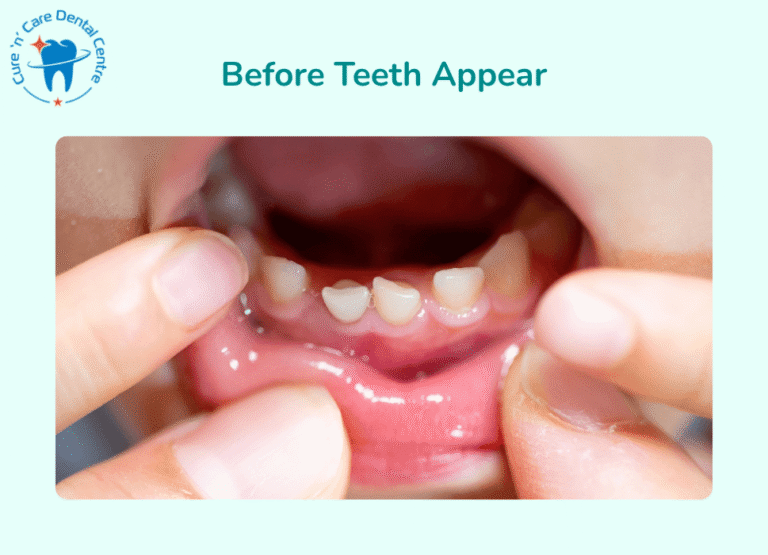
Before Teeth Appear
Even before the first tooth erupts, it’s important to clean your baby’s gums. Use a clean, damp cloth to gently wipe their gums twice a day, especially after feeding.
After Teeth Erupt
Once the first tooth appears, use a small, soft-bristled toothbrush and plain water to brush twice a day. For children under 3 years old, use a smear of fluoride toothpaste about the size of a grain of rice. For ages 3 to 6, a pea-sized amount is ideal.
Teaching Good Habits
- Brush together to make it fun and build consistency.
- Use colorful, child-friendly toothbrushes.
- Replace toothbrushes every 3 months or after illness.
- Encourage rinsing with water after snacks.
Good brushing habits early in life can prevent cavities and gum problems later on.
Common Dental Problems in Babies and Toddlers
Even with careful brushing, young children can develop dental problems. Here are the most common ones our dentists see:
1. Baby Bottle Tooth Decay
One of the most frequent issues we encounter is baby bottle tooth decay, also known as early childhood caries. It occurs when a child’s teeth are frequently exposed to sugary liquids such as milk, formula, or juice. The sugar in these drinks feeds bacteria in the mouth, leading to acid attacks that damage the tooth enamel.
2. Teething Discomfort
Teething is a natural stage but can be uncomfortable for your little one. Common signs include swollen gums, excessive drooling, irritability, and a tendency to chew on objects. To ease the discomfort, gently massage your child’s gums with a clean finger or provide a chilled (not frozen) teething ring.
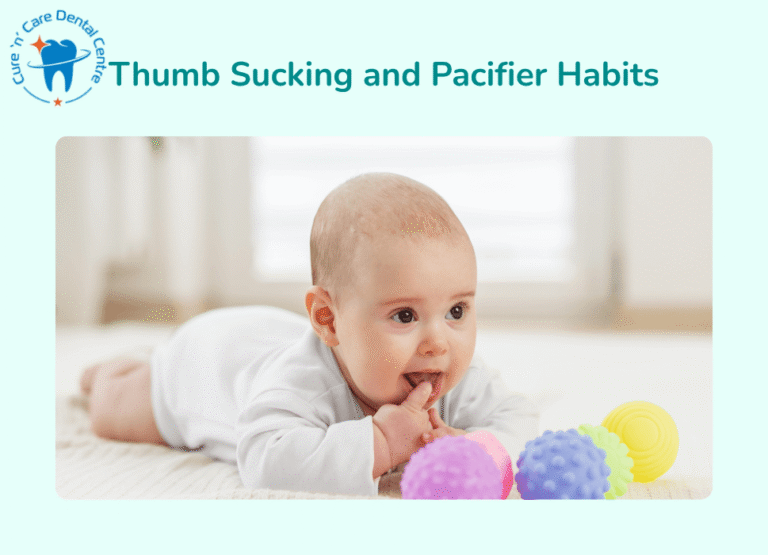
3. Thumb Sucking and Pacifier Habits
Thumb sucking and pacifier use are completely normal for infants and toddlers, as these habits provide comfort and security. However, if they continue beyond age three, they can begin to affect tooth alignment and jaw growth, leading to issues such as open bite or protruding teeth.
4. Early Cavities and Gum Irritation
Cavities can develop in baby teeth just as easily as in adult teeth often faster due to thinner enamel. Poor brushing habits, frequent sugary snacks, or skipping dental visits can all contribute to early childhood caries. Symptoms include white or brown spots on teeth, sensitivity, or bad breath. Similarly, plaque buildup can irritate gums, leading to redness or swelling.
Preventive Dental Care Tips for Parents
Preventive care is the foundation of lifelong oral health. At Cure N Care Dental Centre, we recommend these steps for every parent:
- Schedule your child’s first dental visit by their first birthday.
Early visits help your child become comfortable with dental checkups and allow our paediatric specialists to monitor their oral development from the very beginning. This also helps parents receive tailored guidance on teething, brushing, and nutrition.
- Encourage twice-daily brushing and flossing once teeth touch.
Make brushing a fun, routine part of your child’s morning and bedtime habits. Use a soft-bristled toothbrush and a pea-sized amount of fluoride toothpaste once your child can spit out properly. When teeth begin to touch, introduce gentle flossing to remove plaque and food particles that brushing can’t reach.
- Limit sugary foods and drinks; choose water or milk instead.
Sugar is the leading cause of cavities in children. Frequent snacking on sweets, juices, or sticky treats creates an acidic environment that damages tooth enamel. Encourage healthy alternatives such as fruits, cheese, and plain yogurt, and promote water as the main drink throughout the day.
- Use fluoride toothpaste for cavity protection.
Fluoride strengthens tooth enamel and makes it more resistant to decay. For toddlers under three, use a smear the size of a grain of rice; for older kids, a pea-sized amount is sufficient. Supervise brushing to ensure your child doesn’t swallow toothpaste.
- Get professional fluoride treatments and dental sealants for added protection.
At Cure N Care Dental Centre, we offer gentle fluoride applications and sealants that create a barrier against bacteria and food buildup. Sealants are especially effective on molars, where deep grooves are more prone to cavities.
Baby Teeth Treatments at Cure N Care Dental Centre
Our clinic provides gentle, child-focused dental treatments designed to make every visit a positive experience.
Our paediatric dental services include:
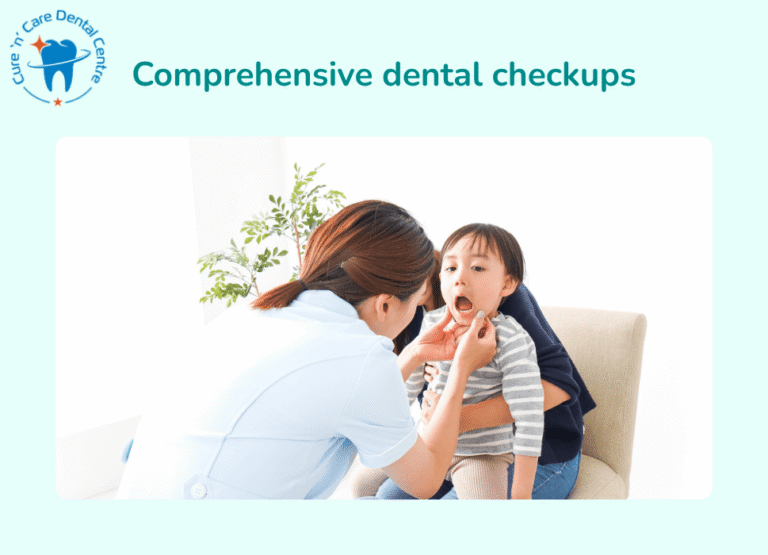
- Comprehensive dental checkups to monitor tooth growth and health.
- Fluoride treatments to strengthen enamel and prevent decay.
- Tooth-colored fillings for treating early cavities safely.
- Gentle extractions when a severely decayed baby tooth needs removal.
- Emergency dental care for tooth injuries or pain.
We use a calm, caring approach to help children feel comfortable during every visit.
Start Early, Smile Bright!
Good oral health begins in childhood. At Cure N Care Dental Centre in Johar Town, Lahore, our gentle paediatric dental care helps children build strong, healthy smiles from the very first tooth. Schedule your baby’s first dental checkup today and let our experts guide you through every step of their oral development.
Diet and Nutrition for Healthy Baby Teeth
Your child’s diet directly affects their oral health. Sugary snacks and drinks feed bacteria that cause cavities.
Healthy foods for strong teeth
- Milk, cheese, and yogurt for calcium.
- Eggs and leafy greens for vitamin D.
- Apples, carrots, and cucumbers to clean teeth naturally.
- Whole grains and lean proteins for balanced nutrition.
Foods to Avoid
- Sticky candies, gummies, and toffees.
- Sugary drinks and packaged juices.
- Constant snacking between meals.
Encourage water as the main drink throughout the day as it keeps the mouth clean and hydrated.
Teething Care: What Parents Should Know
Teething is a natural milestone but can be uncomfortable for babies. Symptoms include drooling, swollen gums, irritability, and mild fever.
Tips to ease Teething Pain
- Gently massage the gums with a clean finger.
- Offer a chilled teething ring (not frozen).
- Wipe drool frequently to prevent rashes.
- Avoid numbing gels or teething tablets unless prescribed.
If your baby has persistent pain, fever, or refuses to eat, consult your paediatric dentist.
Dental Emergencies in Children
Accidents are a part of childhood whether it’s a fall while playing, a sports injury, or an unexpected bump, these moments can sometimes lead to chipped, cracked, or even knocked-out teeth. Knowing how to respond calmly and quickly can make all the difference in protecting your child’s smile.
What to do
- Stay calm and reassure your child.
- If a permanent tooth is knocked out, rinse it gently and keep it moist in milk.
- Contact Cure N Care Dental Centre immediately for emergency care.
Remember, quick action can make the difference between saving and losing a tooth. Early professional attention not only relieves pain but also helps prevent long-term dental complications, ensuring your child’s smile stays bright and healthy.
Role of Parents in Developing Lifelong Oral Habits
Children learn by observing. When they see you brushing and flossing daily, they’ll naturally want to do the same.
Tips for Parents
- Make brushing time fun with songs or rewards.
- Read dental-themed storybooks.
- Praise good brushing habits.
- Visit the dentist regularly to build confidence.
Positive early experiences shape a lifetime of healthy smiles.
Why Choose Cure N Care Dental Centre for Your Child’s Dental Care?
At Cure N Care Dental Centre in Johar Town, Lahore, we understand how important your child’s comfort and safety are. Our experienced paediatric dental team provides:
- A gentle, child-friendly environment.
- Modern dental equipment designed for kids.
- Preventive-focused care to minimize future dental problems.
- Compassionate, patient-centred service for your family.
We focus on making each dental visit educational and stress-free for both children and parents.
Healthy Baby Teeth, Happy Smiles for Life
Strong, healthy baby teeth lay the foundation for a lifetime of confident smiles. With the right baby tooth care at home, regular checkups, and expert guidance from Cure N Care Dental Centre, your child can enjoy excellent oral health from the very beginning.
At our Johar Town clinic, we’re passionate about helping parents create healthy dental habits that last a lifetime. Schedule your child’s next checkup today and give them the best start toward a bright, beautiful smile.
Take the First Step Toward Your Child’s Healthy Smile!
Give your child the gift of good oral health from the very beginning. Visit Cure N Care Dental Centre in Johar Town, Lahore, for compassionate paediatric dental care and expert guidance every step of the way.
FAQs
Why are Baby Teeth Important If They Fall Out Anyway?
Baby teeth act as placeholders for permanent teeth. They help children chew food properly, develop clear speech, and maintain space for adult teeth to grow in correctly. Neglecting them can lead to cavities, infections, and future orthodontic problems.
How can I clean my baby’s teeth at home?
Before teeth appear, gently wipe your baby’s gums with a clean, damp cloth after feedings. Once teeth erupt, use a soft-bristled baby toothbrush and a tiny smear of fluoride toothpaste. Brush twice a day and supervise your child until they can brush effectively on their own.
What causes cavities in baby teeth?
Frequent snacking, sugary drinks, prolonged bottle-feeding, and poor oral hygiene are the main causes of early childhood cavities. Letting your child sleep with a bottle of milk or juice can also cause tooth decay, known as baby bottle tooth decay.
Is fluoride safe for young children?
Yes, fluoride is completely safe when used correctly. It strengthens tooth enamel and prevents cavities. For children under three, use a smear of toothpaste about the size of a grain of rice; for older children, a pea-sized amount is ideal.
My child sucks their thumb or uses a pacifier. Should I be worried?
Thumb sucking and pacifier use are normal in infants and toddlers, but if the habit continues beyond age three, it can affect tooth alignment and jaw growth. Your dentist can suggest gentle ways to help your child stop the habit before it impacts their bite.