

Dental health is a cornerstone of overall wellness, yet it is often underestimated or overlooked in daily healthcare routines. While most people understand the importance of brushing and flossing, few realize the long-term consequences of dental calculus on both the teeth and gums.
At Cure n Care Dental Center in Johar Town, Lahore, we understand that every patient’s oral health needs are unique. That’s why we emphasize preventive care, early detection, and personalized treatment plans designed to maintain and enhance your natural smile.
In this comprehensive guide, we will explore what dental calculus is, how it forms, its effects on oral health.
What is Dental Calculus?
Dental calculus, widely known as tartar, is a hard, mineralized substance that forms on the surfaces of your teeth when dental plaque is not effectively removed through routine brushing and flossing.
While plaque itself is a soft, sticky layer of bacteria, food particles, and saliva that forms continuously on teeth, it becomes a more serious problem when allowed to accumulate. Within just 24–72 hours, plaque begins to harden due to the deposition of minerals from saliva, transforming into dental calculus.
Unlike plaque, which can be removed with regular oral hygiene practices, calculus is firmly attached to the teeth and can only be removed professionally by a dentist or dental hygienist. Its rough surface not only looks unsightly but also provides an ideal environment for bacteria to thrive, further increasing the risk of gum disease, tooth decay, and bad breath.
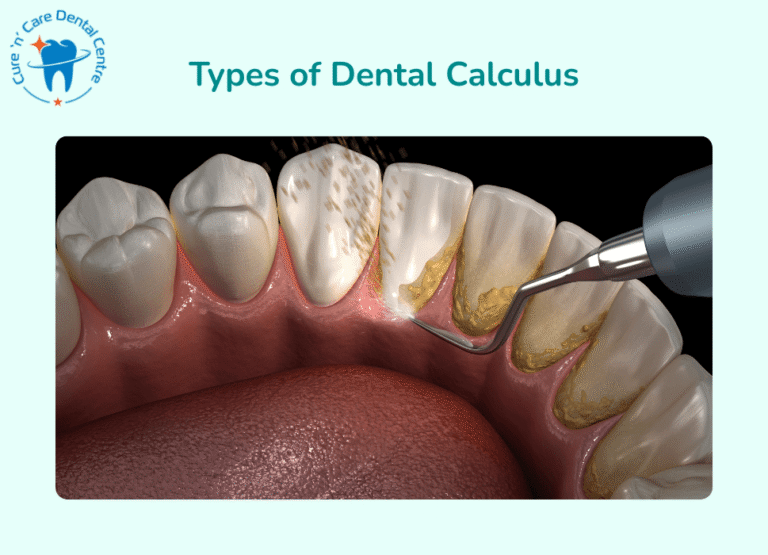
Types of Dental Calculus
Dental calculus can form in different areas of the mouth, and understanding its types is key to recognizing and addressing it effectively:
Supragingival Calculus
- Location: Forms above the gumline, often on the front of the teeth or around the molars where saliva glands are concentrated.
- Appearance: Typically yellow or brown in color, making it visible to the naked eye.
- Impact: While primarily a cosmetic concern initially, supragingival calculus can irritate the gums and create a surface that promotes further plaque accumulation.
2. Subgingival Calculus
- Location: Forms below the gumline, in the pockets between the teeth and gums.
- Appearance: Usually darker in color due to the presence of trapped blood pigments from inflamed gums.
- Impact: More dangerous than supragingival calculus because it can lead to periodontitis, a serious form of gum disease that can damage the supporting bone structure of the teeth and potentially lead to tooth loss.
By understanding the types and formation of dental calculus, patients can better appreciate the importance of regular dental checkups and professional cleanings. Early detection and removal of calculus are crucial steps in maintaining long-term oral health and preventing more serious dental issues.
How Dental Calculus Forms?
Dental calculus does not appear overnight. It develops through a gradual, multi-step process that begins with plaque formation and progresses to hard, mineralized deposits. Understanding this process is essential for effective prevention and timely intervention.
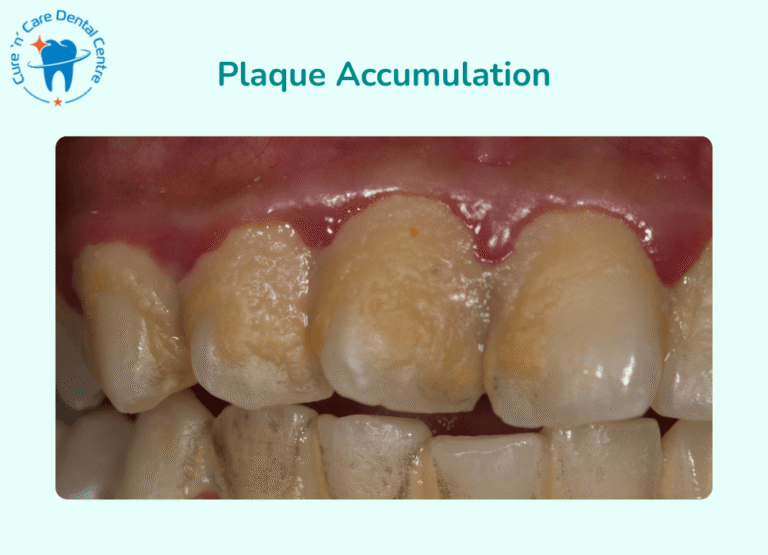
1. Plaque Accumulation
Every day, the natural bacteria in your mouth mix with saliva, food debris, and proteins to form a sticky, colorless layer called dental plaque. Plaque tends to accumulate in areas that are difficult to clean, such as between teeth, along the gumline, and around dental restorations. While plaque itself is soft and removable with regular brushing and flossing, it serves as the foundation for calculus formation.
2. Mineralization
If plaque is not removed promptly, minerals in saliva, mainly calcium and phosphate, begin depositing within the plaque layer. This process, known as calcification, transforms the soft biofilm into a more rigid structure. During mineralization, bacteria continue to thrive inside the plaque, producing acids and toxins that irritate the gums and attack the tooth surface.
3. Hardening
Over time, this mineralized plaque hardens into dental calculus. Once hardened, calculus adheres strongly to the tooth enamel and can no longer be removed through brushing or flossing alone. At this stage, professional dental cleaning is required to remove the deposits safely.
Effects of Dental Calculus on Gums
Dental calculus poses a serious threat to gum health, often developing silently over time. Its rough, mineralized surface provides an ideal environment for bacteria to thrive, leading to a cascade of oral health issues. Understanding the effects of calculus on gums is crucial for preventing long-term damage.
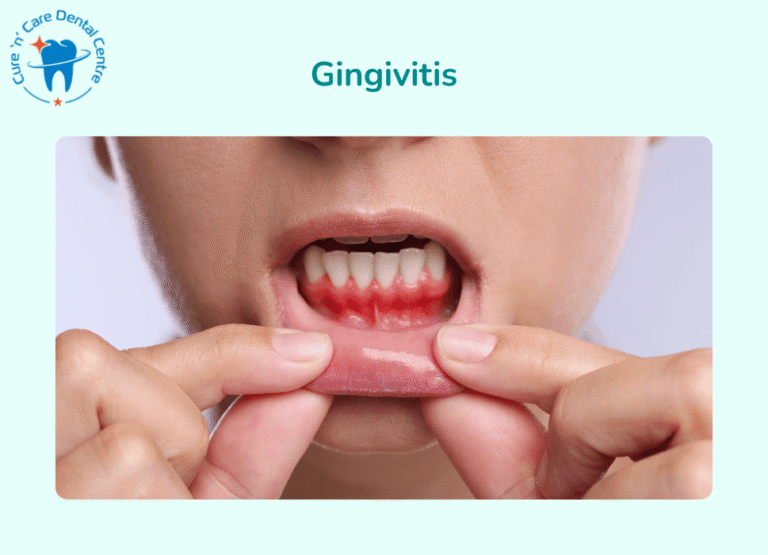
1. Gingivitis
Gingivitis is the most common and earliest form of gum disease caused by dental calculus. The hardened tartar along the gumline creates a rough surface where bacteria accumulate, irritating the gum tissue. This inflammation results in:
- Red, swollen gums that may appear puffy or tender.
- Bleeding while brushing or flossing, even with gentle pressure.
- Mild discomfort or soreness, which can make oral hygiene routines uncomfortable.
Although gingivitis is reversible with proper dental care, if left untreated, it can progress into more severe forms of gum disease. Early detection through regular dental checkups is key to preventing progression.
2. Periodontitis
When subgingival calculus (below the gumline) goes untreated, it can trigger periodontitis, a serious infection that damages the soft tissue and the underlying bone supporting teeth. Symptoms include:
- Receding gums, which expose more of the tooth and its root.
- Formation of deep gum pockets, spaces between the teeth and gums that harbor more bacteria.
- Loose or shifting teeth, indicating damage to the supporting bone.
- Persistent bad breath, caused by bacterial activity and trapped debris.
Periodontitis is a major cause of tooth loss in adults, highlighting the importance of early intervention and professional cleaning to remove subgingival calculus.
3. Gum Recession
Chronic irritation from dental calculus can cause the gums to gradually pull away from the teeth, a condition known as gum recession. Exposed tooth roots become vulnerable, leading to:
- Increased tooth sensitivity, especially to hot, cold, or acidic foods.
- Higher risk of decay on the root surface, which is not protected by enamel.
- Greater susceptibility to infection, as bacteria can more easily penetrate exposed areas.
Gum recession not only affects oral health but also impacts the aesthetics of your smile, making preventive care essential.
Maintain Your Smile with Preventive Care
Regular checkups and professional cleanings are essential to prevent plaque, calculus, and gum disease from taking hold. At Cure n Care Dental Center, we combine advanced techniques with compassionate care to help you maintain a lifetime of healthy teeth and gums. Schedule your visit today and take the first step toward lasting oral wellness.
Effects of Dental Calculus on Teeth
The harmful impact of dental calculus extends beyond the gums, directly affecting the teeth themselves.
1. Tooth Decay
While calculus itself is not acidic, it serves as a reservoir for bacteria that produce acids capable of eroding enamel. Over time, this can lead to:
- Cavities, which may require fillings or restorative procedures.
- Weakening of the tooth structure, increasing the risk of fracture.
2. Staining and Discoloration
Calculus readily absorbs pigments from foods, beverages, and tobacco, resulting in:
- Yellow, brown, or even black discoloration that is difficult to remove with regular brushing.
- A dull, uneven appearance that affects the aesthetics of your smile.
Professional dental cleaning is the only effective way to remove these stains along with the calculus itself.
3. Tooth Sensitivity
As calculus causes gum recession and exposes root surfaces, teeth become increasingly sensitive. Common triggers include:
- Hot or cold beverages
- Sweet or acidic foods
- Air exposure
This sensitivity can significantly affect eating habits, oral hygiene routines, and overall quality of life.
4. Structural Damage
Advanced calculus buildup can also contribute to structural problems in teeth:
- Uneven wear, caused by altered bite dynamics due to tartar accumulation.
- Chips or cracks, resulting from weakened enamel and exposed tooth surfaces.
- Complications in restorative dental procedures, as calculus must be removed before treatments like crowns or fillings.
Systemic Health Implications of Dental Calculus
While dental calculus primarily affects the teeth and gums, its impact can extend far beyond the oral cavity. Research over the past few decades has established strong links between oral health and systemic health, highlighting why preventing and treating calculus is vital not only for a beautiful smile but also for overall well-being.
1. Cardiovascular Disease
Bacteria from dental calculus and inflamed gums can enter the bloodstream, contributing to atherosclerosis, the hardening of arteries. Chronic inflammation caused by gum disease has been associated with:
- Increased risk of heart attacks
- Elevated likelihood of stroke
- Higher incidence of hypertension
Maintaining clean teeth and healthy gums can help reduce inflammation and may lower cardiovascular risk.
2. Diabetes Complications
People with diabetes are more susceptible to gum disease, and the presence of dental calculus can exacerbate blood sugar imbalances. Gum inflammation makes it harder to control blood glucose levels, leading to:
- Poor wound healing
- Increased risk of infections
- Greater likelihood of diabetes-related complications
Conversely, managing oral health can improve glycemic control, highlighting the importance of preventive dental care.
3. Respiratory Infections
Oral bacteria from tartar and periodontal pockets can be inhaled into the lungs, potentially causing or worsening respiratory infections, such as:
- Pneumonia
- Chronic obstructive pulmonary disease (COPD) exacerbations
- Other lower respiratory tract infections
Regular dental cleaning and calculus removal can reduce the bacterial load in the mouth, lowering the risk of these respiratory complications.
4. Pregnancy-Related Issues
Pregnant women with gum disease and heavy calculus buildup may face higher risks of complications, including:
- Preterm birth
- Low birth weight infants
- Increased risk of pregnancy-related inflammation
Maintaining good oral hygiene and regular dental checkups during pregnancy is crucial for the health of both mother and baby.
Why Choose Cure n Care Dental Center in Johar Town, Lahore?
At Cure n Care Dental Center, we combine modern technology with compassionate care:
- Experienced dentists and hygienists skilled in scaling, root planing, and laser therapy
- State-of-the-art equipment for precise, comfortable procedures
- Individualized care plans tailored to each patient’s oral health
- A clean, welcoming environment suitable for families and seniors
Our team emphasizes preventive care and patient education to maintain long-term oral health.
Protect Your Smile, Protect Your Health
Dental calculus may seem like a localized problem affecting only teeth and gums, but its effects can ripple throughout the body. Chronic inflammation, bacterial spread, and immune responses triggered by gum disease are all factors that link oral health to systemic conditions.
At Cure n Care Dental Center in Johar Town, Lahore, our approach emphasizes holistic preventive care. By removing calculus and managing gum disease early, we help patients not only maintain healthy teeth and gums but also support overall physical health.
Schedule Your Dental Cleaning Today
Don’t let dental calculus silently damage your teeth and gums. Take proactive steps to protect your oral health by booking a professional dental cleaning at Cure n Care Dental Center in Johar Town, Lahore. Our expert team ensures a comfortable, thorough cleaning that keeps your smile healthy and bright.
Frequently Asked Questions
Can I remove dental calculus at home?
Unfortunately, no. Once plaque hardens into calculus, it cannot be removed with brushing or flossing alone. Professional cleaning by a dentist or dental hygienist is necessary.
How often should I visit the dentist to prevent calculus buildup?
Most patients benefit from dental checkups and professional cleanings every 6 months. However, if you are prone to rapid plaque buildup or gum disease, your dentist may recommend more frequent visits.
Does dental calculus cause pain?
Calculus itself usually doesn’t cause pain initially. However, it can lead to gum inflammation, sensitivity, and infection, which may cause discomfort over time.
Is dental calculus harmful to overall health?
Yes. Untreated calculus and associated gum disease can increase the risk of heart disease, diabetes complications, respiratory infections, and pregnancy-related issues. Maintaining oral hygiene is essential for overall wellness.
Is dental calculus only a cosmetic problem?
No. While it can affect the appearance of teeth, calculus is also a major contributor to gum disease, tooth decay, and systemic health issues if not treated promptly.